

Sri Lanka Travel Insurance: Do You Need It? (2026 Guide)
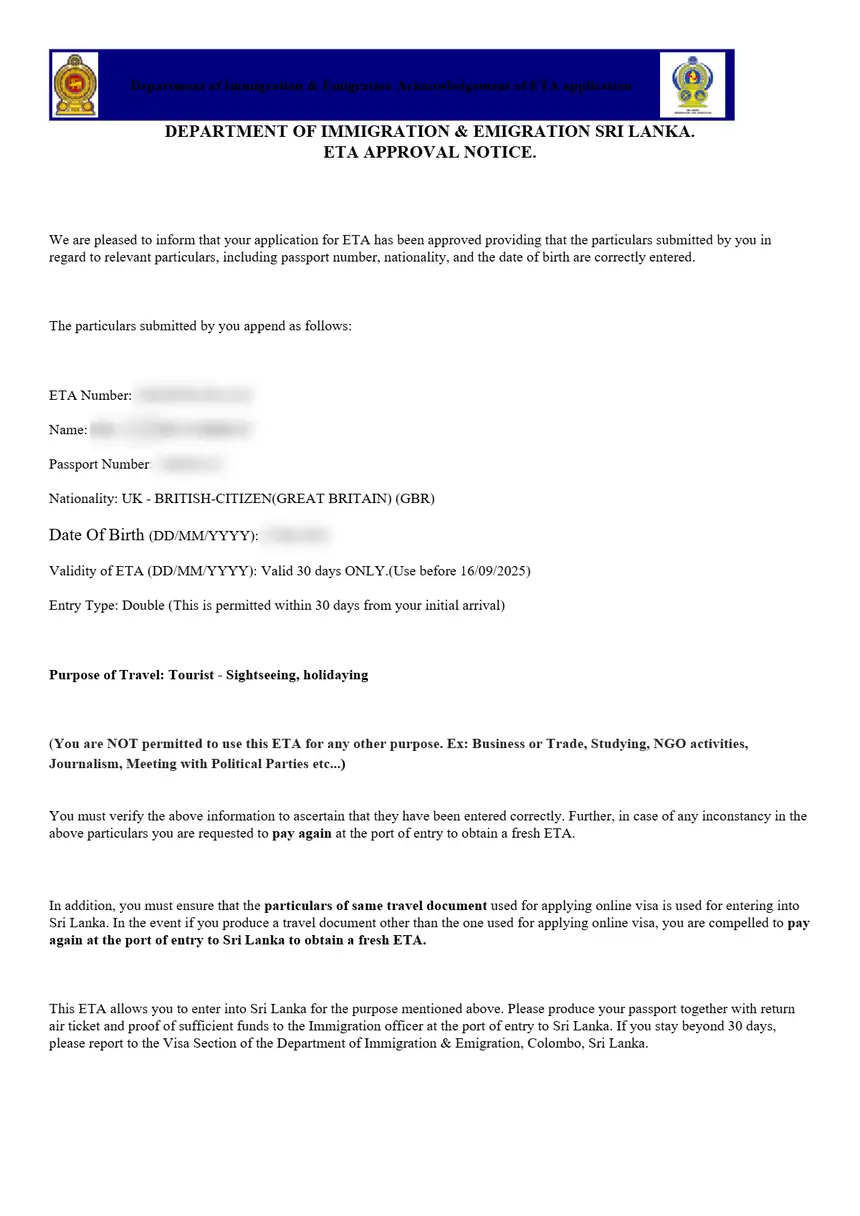
If you are applying for a Sri Lanka ETA, travel insurance is one of the smartest add-ons to your trip planning — even though nobody will ask you to show it. Whether you are heading to Sigiriya, surfing in Arugam Bay, or watching leopards in Yala National Park, having the right policy can save you from unexpected costs ranging from minor inconveniences to life-changing financial burdens.
This guide covers everything you need to know about travel insurance for Sri Lanka in 2026 — from what it covers and how much it costs, to how to choose the right policy for your trip.
Is Travel Insurance Mandatory for Sri Lanka?
No, Sri Lanka does not require travel insurance for entry. Unlike some countries that mandate proof of insurance as a visa condition, Sri Lanka does not ask for insurance documentation when you apply for an ETA (Electronic Travel Authorization) or when you arrive at immigration.
However, several governments and bodies strongly advise it:
- The U.S. Department of State recommends purchasing travel insurance before visiting Sri Lanka and checking with your provider about evacuation assistance and medical coverage.
- The UK Foreign, Commonwealth & Development Office (FCDO) advises travelers to take out comprehensive travel insurance.
- Many travel advisory services note that Sri Lanka’s public healthcare system is basic in rural areas, and private hospital treatment can be expensive for uninsured visitors.
For more details about entry requirements and common traveler questions, see our Sri Lanka visa FAQ.
So while no one at the airport will ask to see your insurance documents, having coverage is a practical necessity — not just a nice-to-have.
Why You Should Get Travel Insurance for Sri Lanka
There are several reasons to invest in a good travel insurance policy before flying to Sri Lanka.
Medical Emergencies
Sri Lanka has public hospitals available to tourists, but quality can vary significantly depending on location. In Colombo, the private healthcare system is well-developed, but treatment at private facilities can cost between USD 50–200 per day for a basic hospital stay and USD 500–2,000 or more for surgical procedures. Medical evacuation to your home country — sometimes necessary for serious injuries or illnesses — can cost tens of thousands of dollars.
Activities popular with visitors — whether you hold a Sri Lanka tourist visa or a Sri Lanka transit visa for a short stopover — such as hiking in the hill country, scuba diving off the coast, or white-water rafting, all carry injury risks. A comprehensive policy with ample emergency medical coverage gives you peace of mind while you enjoy these experiences.
Trip Cancellation and Disruption
Unexpected events like illness, family emergencies, natural disasters, or flight cancellations can derail your plans. Travel insurance typically covers:
- Non-refundable flights and accommodation costs (check your ETA fee — this is a non-refundable government charge)
- Additional expenses from travel delays (meals, hotel stays)
- Rebooking costs if you need to extend your Sri Lanka visa due to disrupted travel
Given that Sri Lanka is in a tropical region where monsoon rains and occasional political disruptions can occur, cancellation coverage is especially valuable.
Lost or Stolen Belongings
Losing your luggage at Bandaranaike International Airport or having your valuables stolen during a tuk-tuk ride in Colombo is frustrating and expensive. Travel insurance helps cover:
- Lost, stolen, or damaged luggage
- Personal belongings including electronics and travel documents
- Replacement passport costs
While Sri Lanka is generally safe for tourists, petty theft does occur in busy areas like Pettah Market or popular tourist spots in Galle. Insurance provides a safety net.
What Does Sri Lanka Travel Insurance Cover?
A comprehensive travel insurance policy for Sri Lanka typically includes the following standard coverage:
| Coverage Type | What It Covers | Typical Limits |
|---|---|---|
| Emergency Medical | Hospital visits, surgery, doctor consultations | USD 25,000 – unlimited |
| Emergency Dental | Acute dental pain, injury-related treatment | USD 500 – 3,000 |
| Trip Cancellation | Non-refundable costs if you cancel before departure | As selected or up to 50,000 |
| Travel Delay | Meals, accommodation during delays | USD 100 – 200 per day |
| Lost Baggage | Replacement of lost or stolen personal items | USD 1,000 – 25,000 |
| Personal Liability | Damage you accidentally cause to others or property | USD 1M – 2.5M |
| Medical Evacuation | Transport to nearest appropriate medical facility | Unlimited or up to USD 100,000 |
| Rental Car Excess | Excess charges on rental car damage claims | USD 2,000 – 10,000 |
Optional Add-Ons
Depending on your plans, you may want to add extra protection:
- Adventure activities — Coverage for surfing, diving, hiking, wildlife safaris, and white-water rafting (activities that standard policies often exclude)
- Motorbike or moped riding — Common for getting around coastal towns, but many basic policies do not cover two-wheeled vehicle accidents
- Cruise cover — If you are doing an Indian Ocean cruise stop in Sri Lanka
- Winter sports — Not applicable in Sri Lanka, but useful if your trip combines Sri Lanka with a skiing destination
What Is Not Covered?
Every insurer has a list of exclusions. Knowing them upfront prevents unpleasant surprises when filing a claim. Common exclusions include:
- Pre-existing medical conditions — Unless specifically declared and approved by the insurer at the time of purchase
- Adventure sports without add-on coverage — Activities like surfing, diving, and motorbiking are often excluded from basic plans
- Travelling against medical advice — If a doctor has advised against travel and you go anyway
- Unattended belongings — Leaving bags on the beach or valuables in an unlocked room voids most claims
- Alcohol and drug-related incidents — Injuries occurring while intoxicated are almost never covered
- Reckless or illegal behavior — Breaking local laws, reckless driving, or deliberately putting yourself in danger
- War, terrorism, or civil unrest — Most policies exclude losses from these events, though some offer limited coverage
- Government-imposed travel restrictions — If Sri Lanka issues a sudden travel ban, coverage may be limited depending on your policy terms
How Much Does Sri Lanka Travel Insurance Cost?
Travel insurance costs vary depending on your age, trip duration, coverage level, and home country. Here are typical price ranges:
| Coverage Level | What You Get | Typical Cost (per week) |
|---|---|---|
| Basic / Budget | Emergency medical, limited baggage, basic personal liability | USD 5 – 15 per week |
| Standard / Comprehensive | Full medical, trip cancellation, baggage, personal liability, travel delay | USD 15 – 50 per week |
| Premium / Comprehensive+ | All of the above with higher limits, lower excess, adventure add-ons included | USD 40 – 120 per week |
For example:
- A basic local policy from Sri Lankan provider Fairfirst starts from around USD 5.10 per week, covering medical benefits up to USD 25,000
- A comprehensive international policy from Allianz with USD 20 million medical coverage starts from around USD 20-30 per week for a standard traveler
- Premium plans from providers like Southern Cross or Cover-More with unlimited medical coverage typically range from USD 75 to 120+ per week
Factors that affect your premium:
- Age — Travelers over 40-50 generally pay more
- Trip length — Longer trips cost proportionally more
- Activities planned — Adventure sports add-ons increase the price
- Level of coverage — Higher limits and lower excess mean higher premiums
- Country of residence — Insurance is regulated at the national level, so prices vary by market
How to Choose the Right Policy
With dozens of travel insurance options available, here is how to narrow down the best policy for Sri Lanka:
-
Start with medical coverage limits — Look for at least USD 50,000 in emergency medical coverage for Sri Lanka. Budget travelers heading only to Colombo and major tourist areas may manage with USD 25,000, but higher limits are safer if you plan adventurous activities or expect to travel to remote areas.
-
Check activity exclusions — Read the policy wording for any activities you plan to do. Surfing, diving, and motorbike riding are commonly excluded from basic plans. If you need coverage for these, buy an add-on or choose a plan that includes them.
-
Compare excess amounts — The excess (also called deductible) is what you pay out-of-pocket before insurance kicks in. Lower excess means less financial shock during a claim, but policies with low or zero excess often cost more.
-
Look at the claim process — Choose an insurer with a straightforward claims process and good customer reviews. Some insurers offer direct hospital billing (cashless), which is especially convenient abroad.
-
Review cancellation terms — Understand what qualifies for trip cancellation. The more generous the terms, the better protected you are.
-
Consider your home country — Some insurers only sell policies to residents of specific countries. If you are based in the US, look at providers like Allianz or Insubuy. For the UK, check providers like Aviva or AXA. For Australia and New Zealand, Cover-More and Southern Cross are popular options. If you are already in Sri Lanka, local options like Fairfirst or Ceylinco offer travel insurance as well.
How to Use Your Travel Insurance in Sri Lanka
If something goes wrong during your trip, here is how to use your insurance:
-
Keep your policy details accessible — Save a digital copy of your policy on your phone and carry a printed summary in your day bag. Store your insurer’s emergency helpline number in your contacts.
-
Contact your insurer before treatment if possible — For non-emergencies, call your insurer’s helpline first. They can authorize treatment and arrange direct billing at partner hospitals, saving you from paying upfront.
-
For emergencies, go to the hospital first — In a genuine emergency, get medical help immediately. Sri Lanka’s national emergency number is 1990 (ambulance service: Suwa Seriya). Colombo’s private hospitals — Lanka Hospitals, Nawaloka Hospital, and Asiri Hospital — are well-equipped for international patients.
-
Document everything — Keep all medical reports, receipts, police reports (if filing a theft claim), and correspondence with airlines or hotels. Insurers require documentation to process claims.
-
File your claim promptly — Most insurers require claims to be filed within 30 days of the incident. Submit all documentation together to avoid delays.