
A Sri Lanka student visa is formally known as a Student Category Residence Visa. Foreign nationals who wish to pursue academic studies in Sri Lanka must obtain this visa before or shortly after enrolling at a recognized institution. The process involves securing university admission, obtaining prior approval from the Department of Immigration and Emigration, and completing the residence visa application in Colombo. This guide covers every step, from eligibility to fees and processing times.
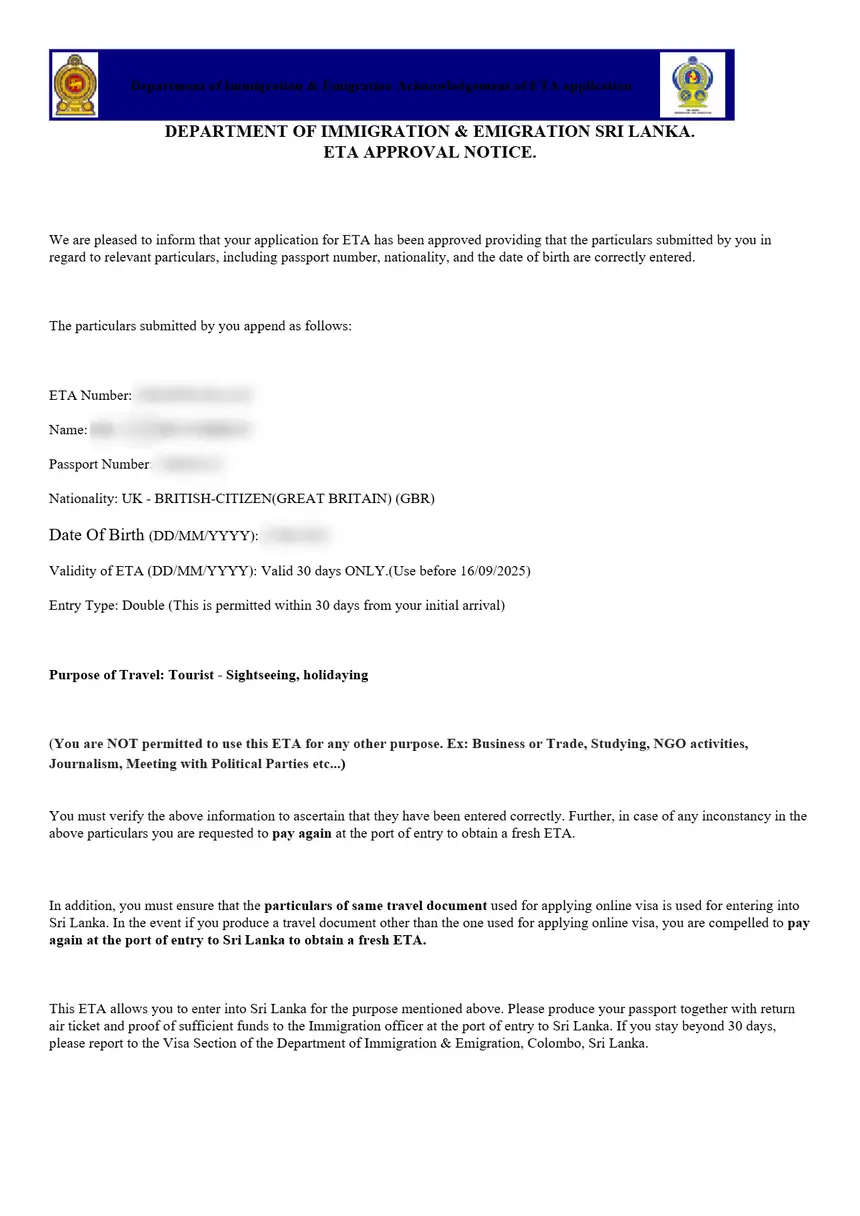
If you are visiting Sri Lanka for short-term tourism or a brief orientation trip, the Sri Lanka ETA is sufficient. However, any academic program lasting more than the standard visitor period requires a dedicated student residence visa.
What Is a Sri Lanka Student Visa?
Sri Lanka does not issue a standalone “student visa” as a single document. Instead, international students enter the country through a two-stage process:
- Entry on a Visit Visa – A short-term visa issued at the port of entry or via the ETA system, allowing the student to arrive in Sri Lanka.
- Student Category Residence Visa – The actual authorization to reside in Sri Lanka for the purpose of study, granted after arrival by the Department of Immigration and Emigration in Colombo.
The Student Category is one of 13 residence visa sub-categories recognized by Sri Lanka’s Department of Immigration and Emigration. It falls alongside Employment, Investor, Religious, NGO/INGO, and other categories. The residence visa is what authorizes you to live and study in Sri Lanka for the duration of your academic program.
The visa is typically issued for one year at a time and is renewable annually, provided you maintain full-time enrollment at a recognized institution.
Who Needs a Student Visa for Sri Lanka?
Any foreign national who intends to pursue formal academic studies in Sri Lanka must obtain a Student Category Residence Visa. This applies to:
- Undergraduate and postgraduate students enrolled at Sri Lankan universities
- Students attending recognized private higher education institutions
- Participants in exchange programs at accredited institutions
- Research students and doctoral candidates affiliated with Sri Lankan universities
- Students enrolled in vocational or technical training programs recognized by the relevant authorities
The Student Category Residence Visa is mandatory regardless of nationality. Even citizens of countries that enjoy visa-free entry to Sri Lanka for tourism must obtain a residence visa if they plan to study beyond the permitted stay of their visit visa.
Student Visa Requirements
The application involves requirements from both the educational institution and the student.
Institution Requirements
The Sri Lankan educational institution must provide:
- Official admission or enrollment letter confirming full-time student status
- Letter of acceptance on institution letterhead
- Confirmation that the institution is recognized by the University Grants Commission (UGC) or relevant accreditation body
- Course details including program name, duration, and start date
- Proof of fee payment or scholarship confirmation (if applicable)
Student Requirements
The foreign student must provide:
- Valid passport with at least six months validity from the date of arrival in Sri Lanka
- Two unused visa pages in the passport
- Completed Visa Application Form “D” for Residence Visas
- Four recent passport-size photographs (taken within the last six months)
- Copy of the approval from the Controller General of Immigration and Emigration
- Police clearance certificate from the home country or recent country of residence
- Academic certificates and transcripts (authenticated where required)
- Medical fitness reports, if requested
- Proof of financial means to cover tuition and living expenses
- Health insurance covering the period of stay in Sri Lanka
- Evidence of accommodation arrangements in Sri Lanka
How to Apply for a Sri Lanka Student Visa
The application process typically follows these steps and spans 4 to 10 weeks.
Step 1: Secure University Admission
Before any visa application can begin, you must receive a confirmed offer of admission from a recognized Sri Lankan educational institution. The institution will issue an official admission letter, which forms the foundation of the visa application.
Step 2: Obtain Prior Approval
The educational institution must obtain prior approval from the Controller General of Immigration and Emigration on behalf of the student. This is a mandatory prerequisite. The institution submits the student’s details and enrollment documentation to the Department for preliminary clearance.
Step 3: Enter Sri Lanka
With the Controller’s preliminary approval (or on a valid visit visa where the institution arranges the transition), the student travels to Sri Lanka. For most students, entry is on a short-term visit visa or ETA.
Step 4: Prepare Application Documents
After arrival, gather all required documents – institution letters, personal identification, financial proof, and medical reports. The educational institution typically assists with this process and provides updated letters as needed.
Step 5: Submit Residence Visa Application
The Student Category Residence Visa application is submitted to the Department of Immigration and Emigration in Battaramulla, Colombo. Both the student and the institution may need to be represented at the Department for the application submission.
Step 6: Visa Review and Issuance
The Department reviews the application. Once approved, the residence visa endorsement is affixed to the student’s passport. The visa specifies the institution name and the period of validity, typically one year.
Student Visa Fees
| Fee Type | Amount |
|---|---|
| Residence Visa (Student Category) | LKR 20,000 per year |
| Entry Visa / ETA | Varies by nationality (see Sri Lanka ETA Fee) |
| Medical Reports | Varies by provider |
| Police Clearance | Varies by country of origin |
The Residence Visa fee is paid at the Department of Immigration and Emigration. Payment counters close at 3:30 PM, and the office operates Monday to Friday from 8:30 AM to 2:00 PM for application acceptance.
For comparison, the Sri Lanka ETA fee for tourist and business visits is significantly lower, as it does not grant long-term residence or study rights.
Processing Time
Processing times vary depending on the student’s nationality, the institution’s cooperation, and whether the Controller General’s prior approval has already been secured:
| Stage | Processing Time |
|---|---|
| Prior approval from Controller General | 2 to 4 weeks |
| Application review at Department | 2 to 4 weeks |
| Total process (from admission to visa) | 4 to 10 weeks |
The typical timeline follows this pattern:
- Weeks 1-2: Secure admission and obtain enrollment letter; institution applies for Controller’s prior approval
- Weeks 3-4: Prior approval issued; student travels to Sri Lanka (if not already present)
- Weeks 5-6: Student prepares documents and submits residence visa application
- Weeks 7-10: Application reviewed, visa issued and endorsed in passport
Starting the process at least two to three months before your program’s start date is strongly recommended to account for potential delays.
Duration and Renewal
Student Category Residence Visas are issued for a limited period, typically one year, and must be renewed before expiry if the student continues to be enrolled. Key points about renewal:
- Renewals require updated enrollment confirmation from the institution
- Proof of continued academic progress may be requested
- The student must have maintained full-time enrollment throughout the previous visa period
- Start the renewal process at least 60 to 90 days before the visa expiry date
- Changing institutions requires a new application process
The Student Category Residence Visa is generally a multiple-entry visa, allowing the holder to travel in and out of Sri Lanka during the validity period without additional entry permits.
Work Restrictions
Students on a Student Category Residence Visa are not permitted to work in Sri Lanka. This is one of the most important distinctions between a student visa and an employment visa. Key restrictions include:
- No paid or unpaid employment is allowed, whether on-campus or off-campus
- Internships that form a mandatory part of the academic program may require separate authorization – consult the institution and the Department of Immigration and Emigration
- Volunteering outside the academic institution may also require prior approval
- Violations of the visa’s work prohibition can result in visa cancellation, deportation, and future entry bans
Students who wish to work in Sri Lanka after completing their studies must transition to an Employment Category Residence Visa through a sponsoring employer. See the Sri Lanka Work Visa guide for details.
Comparison: Student Visa vs. Tourist vs. Work Visa
| Feature | Student Residence Visa | Tourist / ETA | Work Residence Visa |
|---|---|---|---|
| Purpose | Full-time study | Tourism, short visits | Employment |
| Duration | 1 year (renewable) | 30 days | 1 year (renewable) |
| Employment | Not allowed | Not allowed | Allowed |
| Application method | In-country (after prior approval) | Online (ETA) or port of entry | In-country (after prior approval) |
| Sponsorship | Educational institution | Not required | Employer required |
| Fee | LKR 20,000/year | Varies by nationality | LKR 20,000/year |
If you are unsure which visa category fits your situation, the Sri Lanka Visa Application guide provides an overview of all options.
FAQs About Sri Lanka Student Visa
Can I study in Sri Lanka on a tourist visa or ETA?
No. A tourist visa or ETA does not authorize enrollment in formal academic programs. Any study leading to a degree, diploma, or recognized certification requires a Student Category Residence Visa.
How long does the student visa take to process?
The total process from obtaining university admission to receiving the residence visa typically takes 4 to 10 weeks. This includes the Controller General’s prior approval (2-4 weeks) and the application review at the Department of Immigration and Emigration (2-4 weeks).
How much does the Sri Lanka student visa cost?
The Student Category Residence Visa fee is LKR 20,000 per year (approximately USD 60-70). Additional costs include the entry visa or ETA fee, medical reports, police clearance certificate, and document authentication, which vary by nationality and country of origin.
Can I work part-time while studying in Sri Lanka?
No. Student Category Residence Visa holders are not permitted to work in Sri Lanka, whether part-time, full-time, or on a volunteer basis outside the institution. Working on a student visa is a violation of immigration law.
Can I bring my family with me on a student visa?
Yes. Dependents (spouse and children) of Student Category Residence Visa holders can apply for dependent residence visas. The educational institution’s sponsorship letter typically needs to extend coverage to dependents, and separate application fees apply.
What happens if I change institutions?
Changing educational institutions requires a new residence visa application. The student visa is tied to the specific institution, and transferring to a different university or college means applying for a new approval from the Controller General and a fresh residence visa endorsement.
Do I need health insurance to study in Sri Lanka?
While not always enforced at the application stage, having valid health insurance covering the period of stay in Sri Lanka is strongly recommended and may be required by the educational institution. Some institutions include health insurance as part of international student enrollment.
Can I stay in Sri Lanka after graduation?
The Student Category Residence Visa is valid only while you are actively enrolled. After graduation, you must switch to a different visa category if you wish to remain. Options include the Employment Category Residence Visa (with employer sponsorship), the Investor Category, or a new ETA for a short post-graduation stay. For extending your current visa, see the Sri Lanka Visa Extension guide.
Key Takeaways
- The Sri Lanka student visa is the Student Category Residence Visa, issued after arrival by the Department of Immigration and Emigration
- You must first secure admission at a recognized institution before applying for the visa
- The application requires prior approval from the Controller General of Immigration and Emigration
- The fee is LKR 20,000 per year, with additional costs for medical reports and police clearance
- Processing takes 4 to 10 weeks – start at least two to three months before your program begins
- The student visa does not allow employment of any kind in Sri Lanka
- The visa is renewable annually while maintaining full-time enrollment
- Changing institutions requires a new visa application process